
Nairobi's Premier 8-Hour Cultural Loop: Giraffe Centre, Karen Blixen Museum & National Museum
Nairobi rarely reveals its most enchanting secrets to the casual visitor. Yet for the discerning traveler seeking authentic cultural immersion, a single day exploring the capital's interconnected heritage sites unlocks an experience that transcends typical sightseeing. The 8-hour cultural loop combining the Giraffe Centre, Karen Blixen Museum, and Nairobi National Museum represents one of Africa's most compelling day journeys—one that sophisticated travelers increasingly book through Kenya's leading travel specialists to access insider experiences and curated advantages unavailable through standard booking platforms.
Why This 8-Hour Loop Defines Nairobi's Authentic Character
Nairobi's true essence cannot be absorbed from a hotel balcony. The city's identity lives in three interconnected narratives: the conservation of Kenya's iconic wildlife, the literary legacy of colonial-era thinkers, and the documented history of East African civilization. When combined into a single journey, these elements create a sophisticated understanding of Kenya that resonates with culturally-conscious travelers.
The 8-hour cultural loop isn't merely a tour—it's a structured narrative arc that reveals why Kenya matters to the world, why its wildlife demands protection, and how Western perspectives on Africa were shaped by writers and thinkers who called Kenya home. Starting at approximately $95–$115 for standard bookings, these packages represent extraordinary value when considering what's included [1][4].
Stop One: The Giraffe Centre—Encounter Africa's Most Graceful Icon
Why the Giraffe Centre Matters Beyond Typical Zoo Experiences
The African Fund for Endangered Wildlife, known globally as the Giraffe Centre, sits on lush grounds in Karen, just 4 kilometers from the Karen Blixen residence [8]. But this isn't a confined animal facility. It's a living conservation laboratory where ten Rothschild giraffes—one of the world's most endangered large mammals—live under dedicated care and education.
Located in the grasslands where these magnificent creatures historically roamed, the Giraffe Centre focuses on species that exist nowhere else naturally. Each giraffe has a documented story. Daisy IV, for instance, represents the fourth generation of the centre's flagship conservation lineage, born on-site and part of a carefully managed breeding program [6].
The Experience: More Than Feeding Giraffes
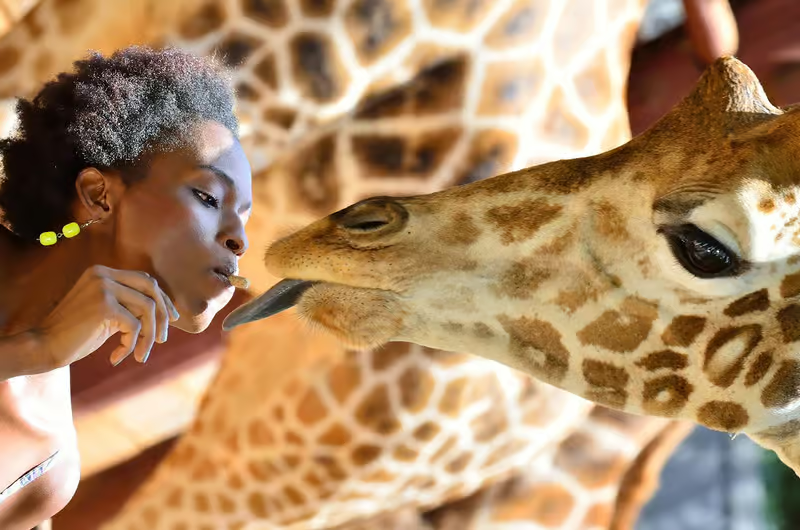
Visitors access a raised observation platform where the centre's resident giraffes approach with remarkable gentleness. The hand-feeding experience—holding grain pellets while a 1,200-pound animal delicately extends its 20-inch tongue—creates an immediate, visceral connection to wildlife that photographs can barely capture.
But the real value emerges through context. Expert guides explain the Rothschild giraffe's precarious status, the centre's breeding protocols, and the conservation education initiatives that have transformed attitudes toward wildlife across Kenya. The centre receives over 25,000 student visitors annually, making it instrumental in shaping the next generation of conservation leaders [6].
The grounds also host warthogs, and the adjacent Mamba Village offers encounters with Kenya's most notorious reptiles—optional but increasingly popular with visitors seeking comprehensive wildlife context [6].
Practical Details for Your Visit
- Hours: 9:00 AM–5:30 PM, seven days weekly [8]
- Entry Fee: $20 USD per person [8]
- Optimal Timing: Tours typically arrive mid-morning when giraffes are most active
- Photography: The raised platform provides exceptional lighting for professional-quality giraffe photography
- Duration at Giraffe Centre: 60–90 minutes within the 8-hour loop
Stop Two: Karen Blixen Museum—Step Into the Legacy of "Out of Africa"
The Literary and Historical Significance
Karen Blixen's coffee farm became immortalized through her masterwork "Out of Africa"—a narrative that shaped Western perceptions of Kenya for generations. Her colonial-era residence, now a meticulously preserved museum, stands as one of East Africa's most significant literary landmarks.
Walking through the Karen Blixen Museum isn't simply a celebrity home tour. It's an encounter with the intellectual and emotional world of a woman who wrote some of the 20th century's most memorable prose while living on Nairobi's outskirts. Her reflections on Africa, colonialism, class, and the human condition remain startlingly relevant today.
What You'll Discover Inside
The museum preserves Blixen's personal spaces—her writing desk where she composed her most famous works, her living quarters, and the gardens where she found inspiration. Period furnishings, original photographs, and archival documents construct a portrait of colonial Kenya that complicates simplistic historical narratives.
Expert guides provide context that enriches the experience considerably. They explain Blixen's relationship with her Kenyan staff, her observations about race and power, and her eventual return to Denmark after losing her beloved farm. For readers of "Out of Africa" or those interested in colonial history, this visit transforms abstract literary memory into tangible human experience.
Additional Cultural Immersion
Many comprehensive 8-hour packages include stops at traditional bead workshops near the museum [2]. These facilities showcase Kenyan artisanal traditions, offering opportunities to purchase authentic beadwork directly from craftspeople and understand the cultural significance of traditional adornment patterns.
Visitor Essentials
- Location: Karen district, approximately 12 kilometers southwest of downtown Nairobi
- Duration: 60–90 minutes typically allocated within 8-hour tours
- Photography: Most areas permit photography; some personal spaces may be restricted
- Climate Consideration: The grounds feature considerable outdoor walking; protective footwear recommended
Stop Three: Nairobi National Museum—Understand Kenya's Deeper History
Why Museum Time Elevates the Entire Experience
The Nairobi National Museum functions as the intellectual synthesis point for your 8-hour cultural loop. After experiencing Kenyan wildlife conservation firsthand and stepping into colonial-era literary history, the museum provides the broader historical, paleontological, and anthropological context that transforms isolated experiences into a coherent understanding of Kenya.
Core Collections and Galleries
The museum's most significant exhibits include:
- Paleontology Section: Original fossils and reconstructions documenting Kenya's place in human evolution. Specimens include remains from Lucy's ancestral lineage, grounding visitors in Africa's role as humanity's birthplace [4].
- Cultural Heritage Galleries: Comprehensive displays representing Kenya's diverse ethnic groups—Maasai, Kikuyu, Samburu, Turkana, and others. Traditional weapons, jewelry, ceremonial objects, and domestic implements illustrate sophisticated cultural systems developed over centuries [4].
- Natural History Collections: Taxidermied wildlife displays and geological specimens explaining Kenya's diverse ecosystems and the scientific principles underlying conservation efforts you witnessed at the Giraffe Centre.
- Contemporary Kenya Section: Materials addressing post-colonial Kenya's development, independence movement, and modern nation-building [4].
The Guided Museum Experience
Standard allocations provide approximately 60 minutes for museum exploration [4]. Professional guides typically focus on Kenya's pre-colonial sophistication, emphasizing that African civilizations developed complex governance, trade systems, and cultural expressions independently. This context significantly enriches the previous visits by framing them within centuries of Kenyan achievement rather than isolated modern moments.
Understanding Your 8-Hour Timeline
A typical 8-hour cultural loop operates as follows:
- 10:00 AM–11:30 AM: Hotel pickup and transport to Giraffe Centre (30 minutes drive)
- 11:30 AM–1:00 PM: Giraffe Centre experience (90 minutes)
- 1:00 PM–2:00 PM: Drive to Karen Blixen Museum area, including optional bead workshop stop (60 minutes)
- 2:00 PM–3:30 PM: Karen Blixen Museum exploration (90 minutes)
- 3:30 PM–4:30 PM: Drive to Nairobi National Museum (60 minutes)
- 4:30 PM–5:30 PM: Nairobi National Museum guided tour (60 minutes)
- 5:30 PM–6:00 PM: Return transport to hotel (30 minutes)
This timeline balances activity with appropriate pacing, avoiding the exhaustion that characterizes poorly structured multi-stop tours [1][3].
Booking Your 8-Hour Cultural Loop: What's Included vs. What's Not
Standard Package Inclusions
Most 8-hour cultural loop packages from established providers include:
- Round-trip hotel transportation via private vehicle [1][2][4]
- Professional English-speaking guide throughout the day [2][4]
- Entrance fees to all three primary locations (Giraffe Centre, Karen Blixen Museum, Nairobi National Museum)
- Structured guided experiences at each stop rather than self-directed exploration
- Flexibility to extend time at any location if preferred
What Typically Requires Additional Payment
- Lunch (though many premium operators include lunch at mid-journey)
- Entrance to Mamba Village or other optional side attractions
- Giraffe feed pellets (typically $5–$10 for enhanced feeding experiences)
- Gift shop purchases at any location
- Gratuities for your professional guide
Cancellation and Flexibility
Reputable providers typically offer free cancellation up to 24 hours before your scheduled departure [2]. This flexibility proves essential for travelers whose plans may shift during multi-day Kenya itineraries.
The Advantage of Booking Through Kenya's Leading Travel Specialists
Why Direct Booking Sometimes Falls Short
Standard online booking platforms offer convenience, but they rarely provide the curated advantages that distinguish exceptional Kenya experiences from merely checking boxes. When you book directly through mass-market platforms, you typically receive:
- Guides assigned through workforce rotation systems rather than experience matching
- Standard timing that doesn't accommodate individual interests or preferences
- Limited context about what you're actually experiencing
- No relationship-building for future trips or referrals
What Partnership With Kenya's Expert Travel Guides Unlocks
As one of Kenya's leading travel agencies run by experienced safari guides, we offer fundamentally different value:
- Exclusive Rates and Packages: Our long-standing relationships with conservation facilities, museums, and transport providers enable rates that often undercut mass-market pricing while including premium elements. We've negotiated priority access windows, allowing you to experience each location when crowds are minimal.
- Expert Guide Matching: Rather than random assignment, we pair travelers with guides whose background and interests align with yours. If you're a literary enthusiast, your guide understands the nuances of Blixen scholarship. If you're a conservation professional, your guide provides technical depth at the Giraffe Centre.
- Customized Itinerary Flexibility: We're not constrained by fixed timings. If you're captivated by a particular museum gallery or want extended photography time with giraffes, we adjust seamlessly—including returning guides at optimal times rather than rushing to maintain platform schedules.
- Kenya-Based Concierge Support: Our team works from Nairobi, meaning real-time problem-solving if logistics shift, traffic patterns change, or you need immediate recommendations about weather adjustments or itinerary modifications.
- Continuity for Multi-Day Itineraries: If the 8-hour cultural loop represents just one day of your Kenya journey, we coordinate across your entire trip, ensuring guides develop rapport with you and can provide personalized recommendations that evolve throughout your visit.
- Conservation Impact: A portion of your package supports the Giraffe Centre's education initiatives and conservation programs. You're not simply visiting—you're contributing to endangered species protection through your choice of travel partner.
The Practical Booking Advantage
When you contact our travel specialists, we'll ask thoughtful questions: How comfortable are you with early morning starts? Do you prefer concentrated walking or more vehicle-based experiences? Are there specific aspects of Kenyan history or conservation most important to you? These conversations generate customized recommendations that direct-booking platforms cannot provide.
Pricing and Value Analysis
Standard Market Pricing
8-hour cultural loop packages typically range from $95–$115 per person through established platforms [1][4]. For couples or small groups, this represents approximately $190–$230 for a pair, or $285–$345 for three travelers.
What You're Actually Paying For
This isn't premium transportation with luxury accommodation. You're paying for:
- Professional expertise through multi-hour guided interpretation (potentially $50–$75 value)
- Vehicle rental, fuel, and driver (approximately $40–$50 value)
- Entrance fees to three major institutions (approximately $40–$50 combined value)
- Logistics coordination, scheduling, and customer service
When itemized, the package pricing demonstrates clear value—you'd spend $150+ paying for components separately.
Premium Add-Ons Worth Considering
- Private Vehicle Upgrade: Approximately +$20–$30, ensures you're not sharing transportation with unrelated travelers
- Lunch Inclusion: Approximately +$15–$25, provided at a quality restaurant within your itinerary
- Small Group Guarantee: Approximately +$10–$15, caps your group at 4–6 travelers rather than larger cohorts
- Extended Photography Session: Approximately +$25–$40, allocates 90 minutes rather than 60 at the Giraffe Centre for serious photographers
Preparation Tips for Your 8-Hour Cultural Loop
What to Wear and Bring
- Footwear: Comfortable, closed-toe walking shoes with good traction. You'll navigate varied terrain at the Giraffe Centre and considerable walking through museum galleries.
- Clothing: Light, breathable layers. Nairobi sits at 5,000+ feet elevation; mornings can feel cool, but midday sun is intense.
- Sun Protection: High-SPF sunscreen (reapply after giraffe feeding), sunglasses, and a hat or cap
- Camera Equipment: The Giraffe Centre provides exceptional wildlife photography opportunities; bring backup batteries and memory cards
- Hydration: A refillable water bottle; your guide will ensure access to purified water throughout the day
- Medications: If you require any regular medications or have sensitivity to travel, bring adequate supply
Pre-Visit Reading
Arriving with context dramatically enhances your experience. Consider reading excerpts from Blixen's "Out of Africa" before your museum visit. Familiarity with her prose makes walking through her preserved residence extraordinarily poignant. Similarly, basic knowledge of Kenya's post-colonial history enriches your museum experience.
Photography Expectations
The Giraffe Centre provides world-class photography opportunities—many travelers' most memorable images emerge from giraffe feeding moments. However, be prepared for crowds, especially on weekend visits. Professional guides know optimal positioning and timing to capture less-crowded shots.
When to Reserve Your 8-Hour Cultural Loop
Seasonal Considerations
Nairobi experiences mild variation throughout the year. Optimal periods for this itinerary include:
- July–October: Driest period; roads in optimal condition
- January–February: Mild temperatures; pleasant weather
- December (early): Post-rainy season greenery; fewer crowds than later December holiday period
Avoid April–June when rainfall is heaviest, potentially affecting comfort during outdoor portions.
Booking Timeline
Reserve at least 2–3 weeks in advance, particularly if you have specific date preferences. Peak travel seasons (July–August, December–early January) may require 4+ weeks advance booking for optimal guide and vehicle allocation.
Integration With Broader Kenya Itineraries
Typical Sequencing for Multi-Day Trips
The 8-hour cultural loop functions exceptionally well as:
- First Day Activity: Arrives in Nairobi, acclimates to Kenya through concentrated cultural immersion
- Mid-Journey Rest Day: Breaks extensive safari schedules with urban cultural engagement
- Final Day Before Departure: Extends your last day before international flights with accessible attractions near the city
Complementary Experiences
The 8-hour loop pairs naturally with:
- Nairobi National Park morning game drive (4 hours)
- David Sheldrick Wildlife Trust elephant orphanage visit (2 hours) [1]
- Bomas of Kenya tribal performances (2–3 hours) [3][4]
- Nairobi food scene evening experiences
Your Next Step: Consulting With Our Kenya Travel Specialists
The 8-hour cultural loop represents one of East Africa's most thoughtfully constructed day experiences. Whether you're interested in wildlife conservation, literary history, or comprehensive cultural understanding, this itinerary delivers genuine value.
We encourage you to contact our Kenya-based travel specialists before finalizing any booking. Brief conversation—often just 15–20 minutes—allows us to understand your specific interests, travel style, and budget. In many cases, we identify customizations or alternative sequencing that standard platforms never discover.
Our team hasn't simply learned about Kenya's attractions; we've guided hundreds of travelers through these very locations. We understand which guides provide the deepest interpretation, which seasonal considerations matter for your dates, and how to structure your day for genuine engagement rather than rushed checkboxes.
Reserve your 8-hour cultural loop through our expert Kenya travel specialists. You'll receive competitive pricing, personalized guidance, and the assurance that every detail reflects genuine expertise rather than algorithmic scheduling.
Nairobi's treasures are waiting. Let's ensure you experience them extraordinarily.
Ready to Experience This?
Let our local-born guides craft your perfect safari adventure with insider knowledge and personalized service.